
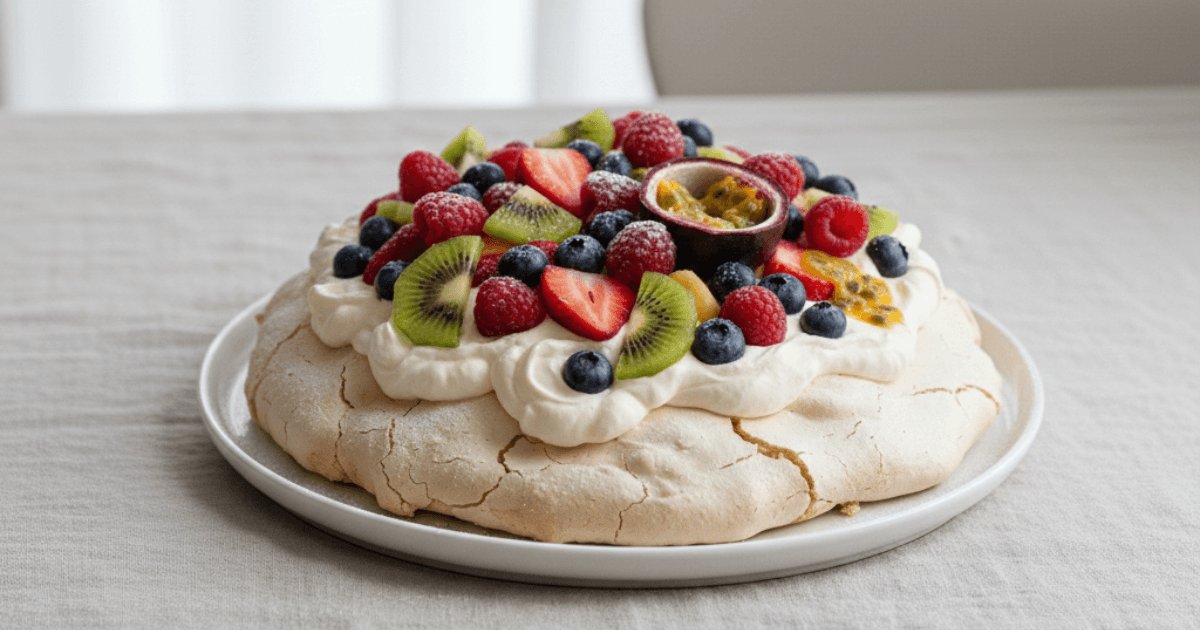
Ever tried making pavlova and ended up with a cracked, weepy mess? Yeah, it’s like the baking world’s ultimate prank—looks stunning in pics but flops in real life. Don’t sweat it, though; this super-reliable pavlova recipe will give you that killer crisp shell and gooey marshmallow center every single time.
Finish it off with whipped cream and fresh fruit, and there you have it—a pavlova dessert hailing from Australia or New Zealand, named in honor of ballerina Anna Pavlova. Perfect for parties or just treating yourself!
Table of Contents
The Failsafe Pavlova Recipe
This is your no-fail roadmap to nailing how to make pavlova, especially if you’re new to this. It covers all the pavlova tips for beginners, like getting those egg whites to stiff peaks without drama.
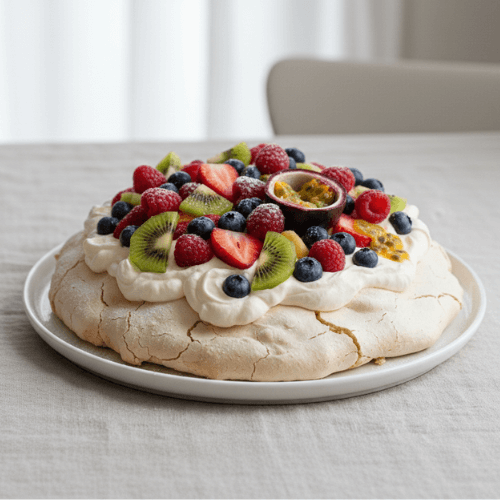
Pavlova
Equipment
- A large mixing bowl
- An electric or hand mixer
- Baking tray + parchment paper
- Spatula
- Measuring cups & spoons
- Another bowl for whipping cream
- a piping bag for fancy swirls, and a cooling rack
Ingredients
For the meringue
- 4 egg whites
- 1½ cups sugar
- 2 tsp cornstarch
- 1½ tsp white vinegar OR ¼–½ tsp cream of tartar
- Pinch of salt
- Totally optional vanilla, lemon zest, or a few drops of lemon juice for flavor
For the topping
- 1 cup cold heavy cream
- 2½ tbsp powdered sugar
- A splash of vanilla
- Fresh fruit berries, kiwi, passionfruit… whatever looks good
Instructions
Heat things up
Preheat the oven to 150°C / 300°F. Grab a tray, line it with parchment, and if you want to be extra neat, draw a circle as a guide.Whip the egg whites
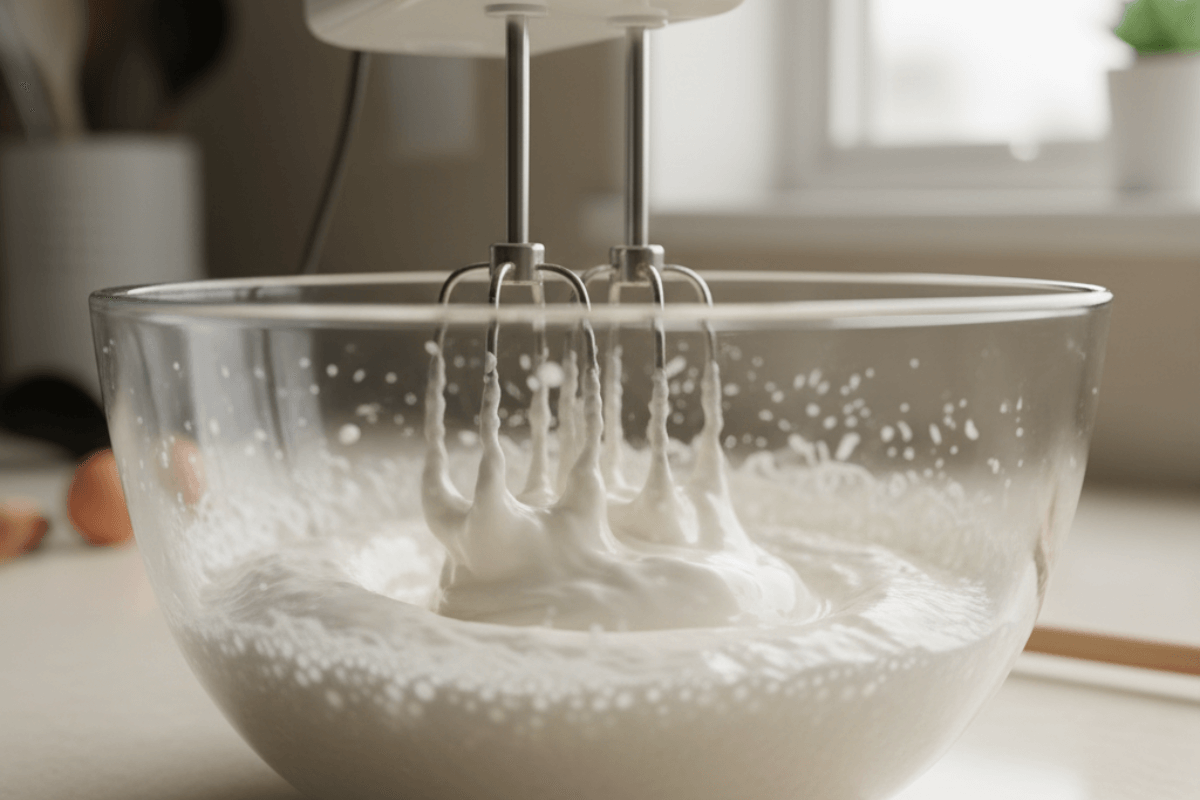
Mix the egg whites until soft peaks are formed. (Clean bowl = VERY important. Any grease and the whites will be like “nope.”)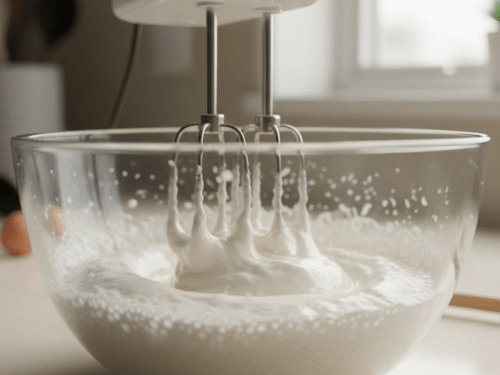
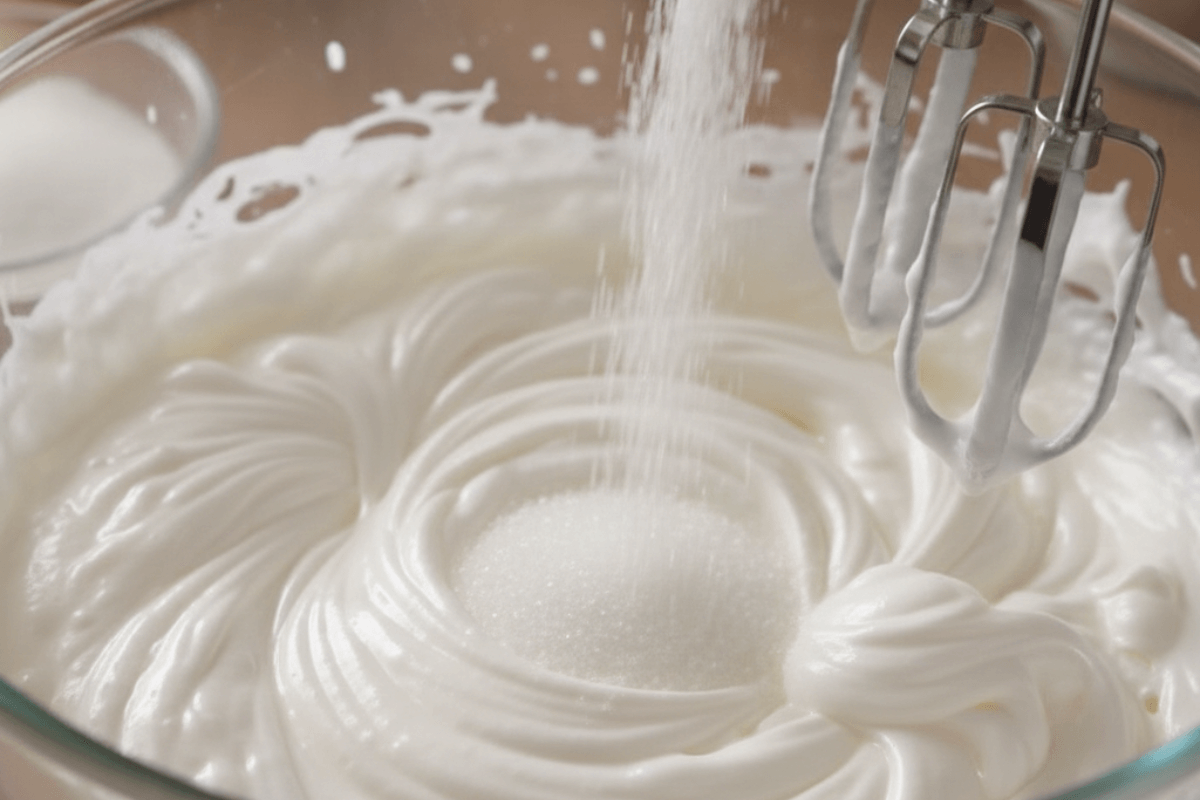
Add the sugar slowly
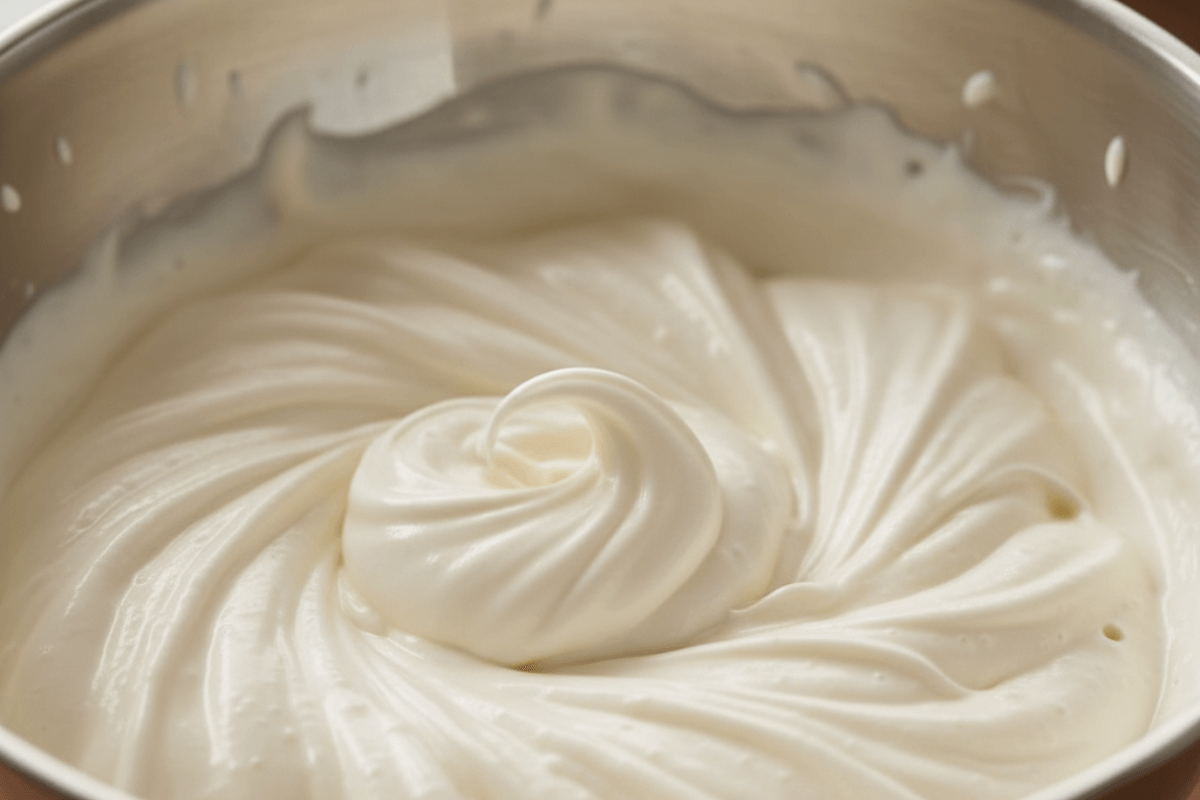
Keep whisking while adding the sugar a little at a time. You’ll know it's ready when it looks shiny and forms stiff peaks — like a glossy, fluffy cloud.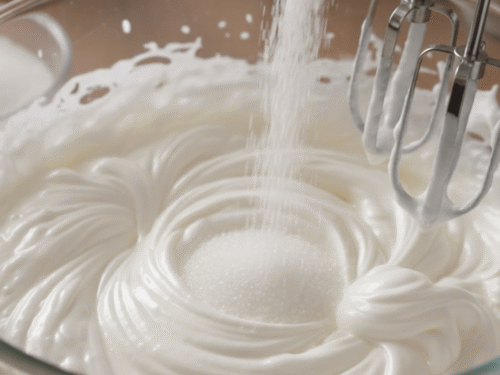
Add the extras
Gently fold in the cornstarch, vinegar/cream of tartar, and vanilla or lemon. Be gentle… treat it like you’re folding a baby blanket.Shape the pavlova
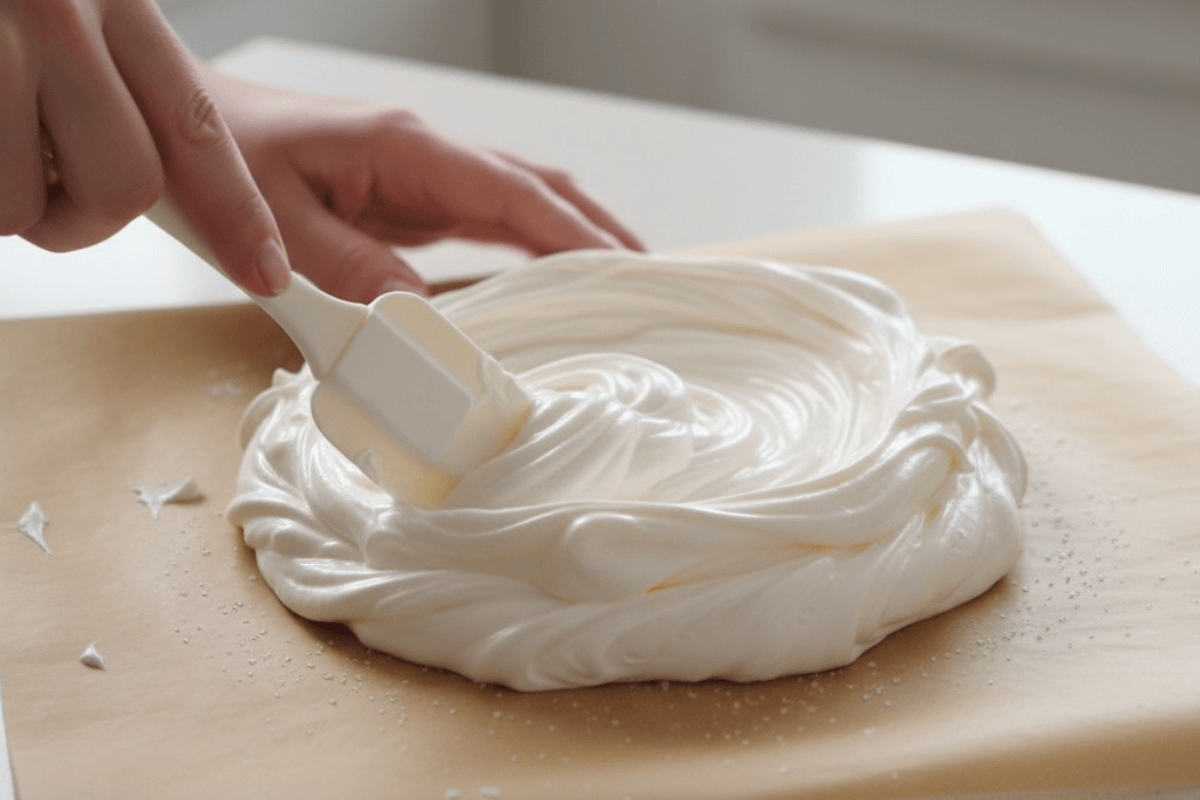
Scoop the mixture onto your tray and shape it into a circle. Make the edges a bit higher so the cream and fruit have a “nest” to sit in later.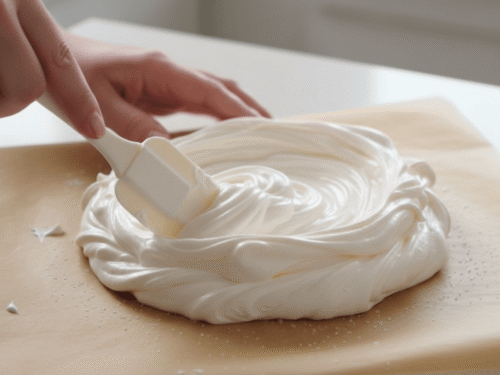
Bake slow and steady
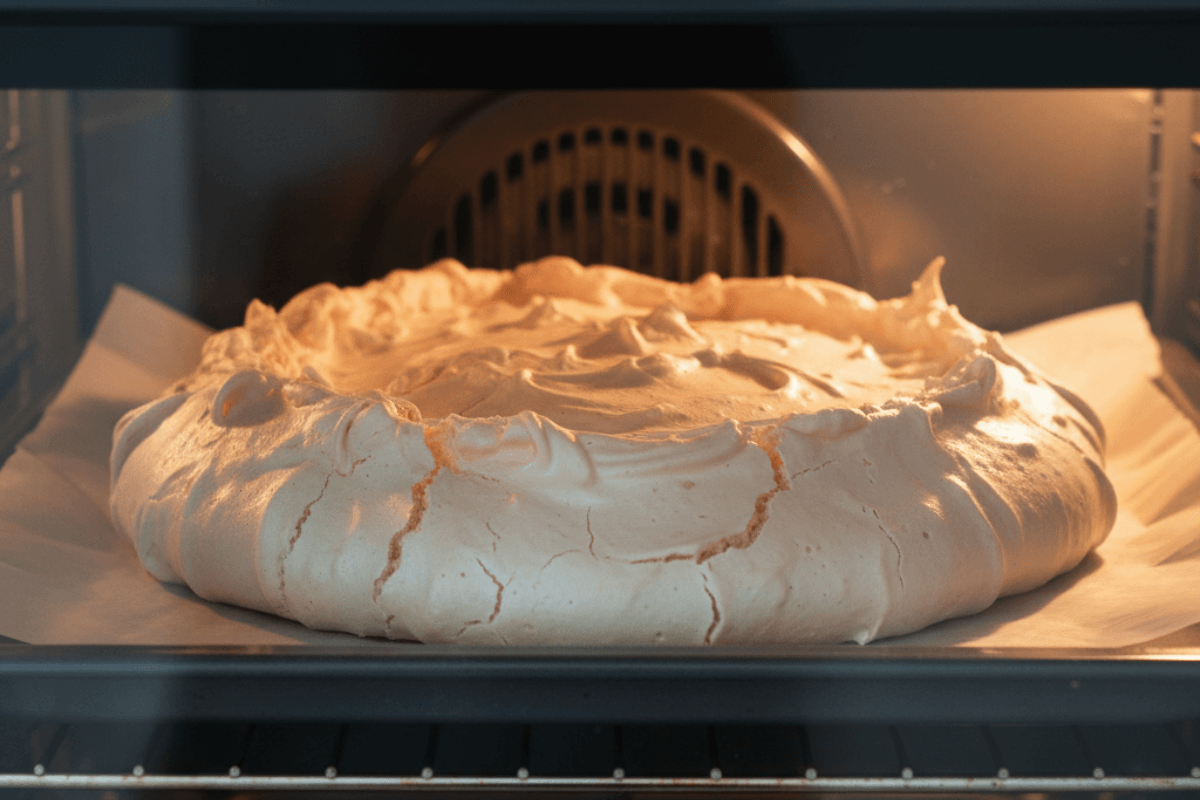
Bake for around 1 hour. Then turn off the oven and let it cool inside with the door closed for at least 30–60 minutes. This keeps it from cracking like the Sahara.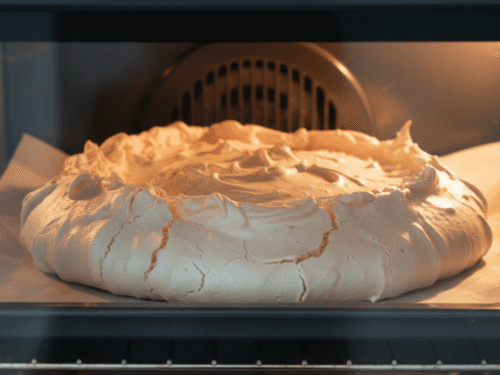
Make the whipped cream
Whip the cold cream with powdered sugar (and vanilla, if you’re feeling fancy) until thick and dreamy.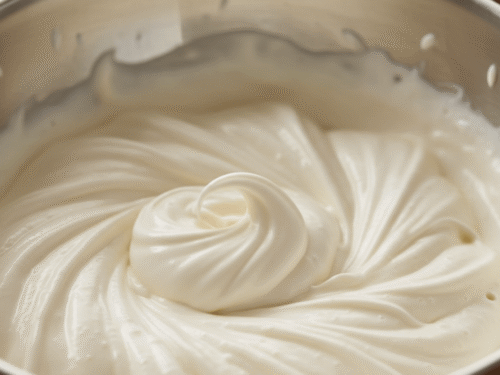
Assemble!
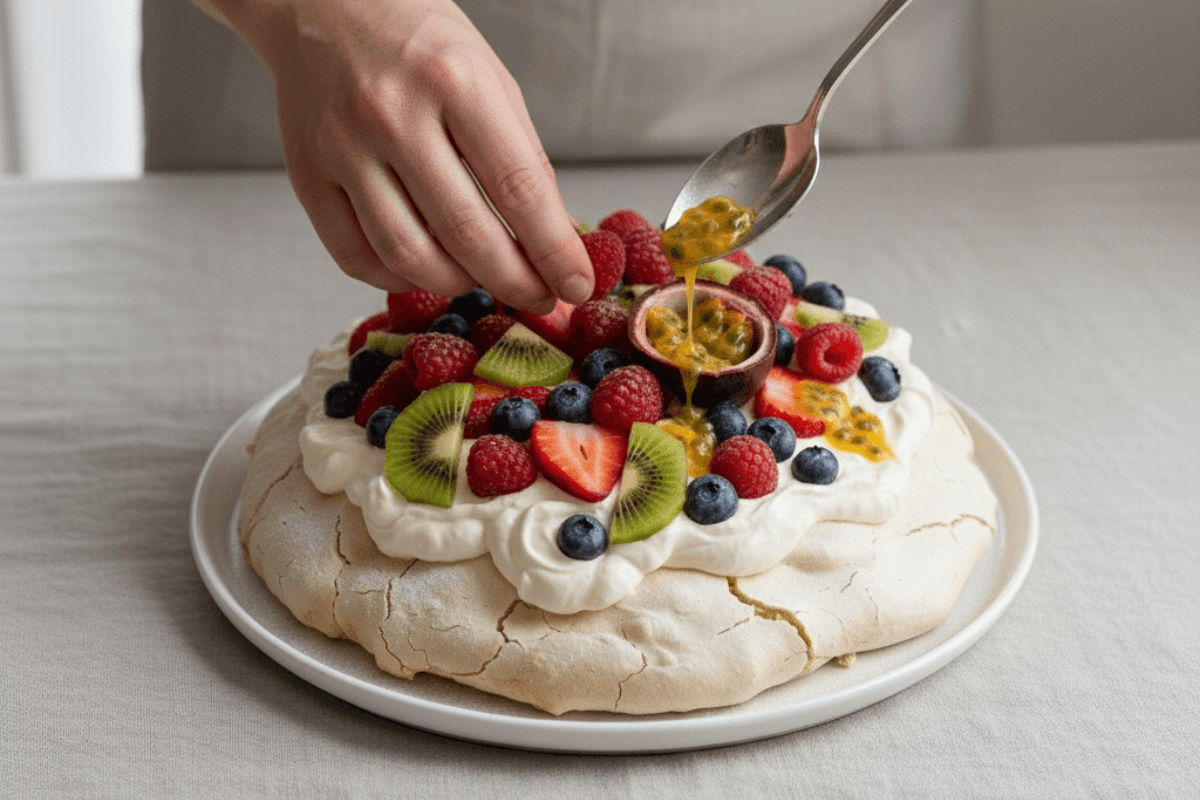
Once everything’s cool, top the pavlova with whipped cream and your favorite fruits. Serve it soon — it’s not one of those desserts that likes to wait around.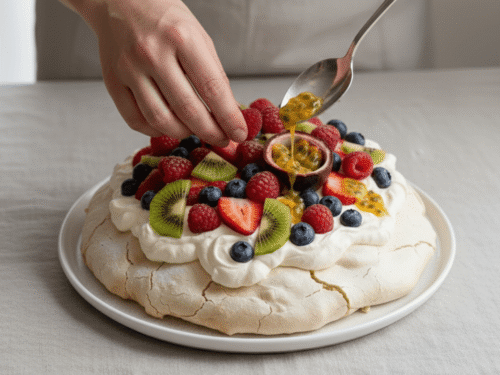
Notes
- Slow baking + slow cooling = the key to avoiding cracks.
- Make sure everything is clean and dry — egg whites can be dramatic.
- Fruit toppings are totally flexible. Go with whatever tastes good or looks pretty.
- Best eaten fresh, because the cream and fruit will soften the meringue over time.
- Yes, you can make a lighter version… but why would you?
Nutrition (per ~100g)
Just a heads-up: pavlova is sweet. Like, really sweet.Approximate values:
- 280 calories
- 8–11.6 g fat
- ~7 g saturated fat
- 2.7–3.8 g protein
- 30–40 g carbs (almost all sugar)
Elevating Your Pavlova Toppings
Take your pavlova recipe from good to “whoa, Instagram gold” with these fun layers.
Whipped Cream: The Cloud Layer
Grab cold heavy cream, maybe a scoop of powdered sugar, and vanilla. Whip to soft or stiff peaks—soft is great if you’re chilling it.
Pro move: Mix in crème pâtissière for crème diplomat or a smidge of gelatin to keep it from deflating. Whipped cream topping done right!
The Best Fruits and Flavor Combinations (Dessert Pavlova Recipe)
- Classic Topping: Strawberries, raspberries, blueberries—soft and juicy, total crowd-pleaser.
- Tart & Seasonal Blends: Use passion fruit, kiwi, or lime zest for a tart touch that offsets sweetness; enhance your summer fruit treats.
- Curds and Purees: Slather on lemon curd (Mary Berry style) or pomegranate for zing before cream.
Mini Pavlova and Pavlova Cake
- Mini Pavlovas: Pipe little nests or kisses—super cute and quick to serve; mini pavlova wins.
- Pavlova Cake: Stack layers of meringue, cream, and fillings for a fancy tower; pavlova cake goals.
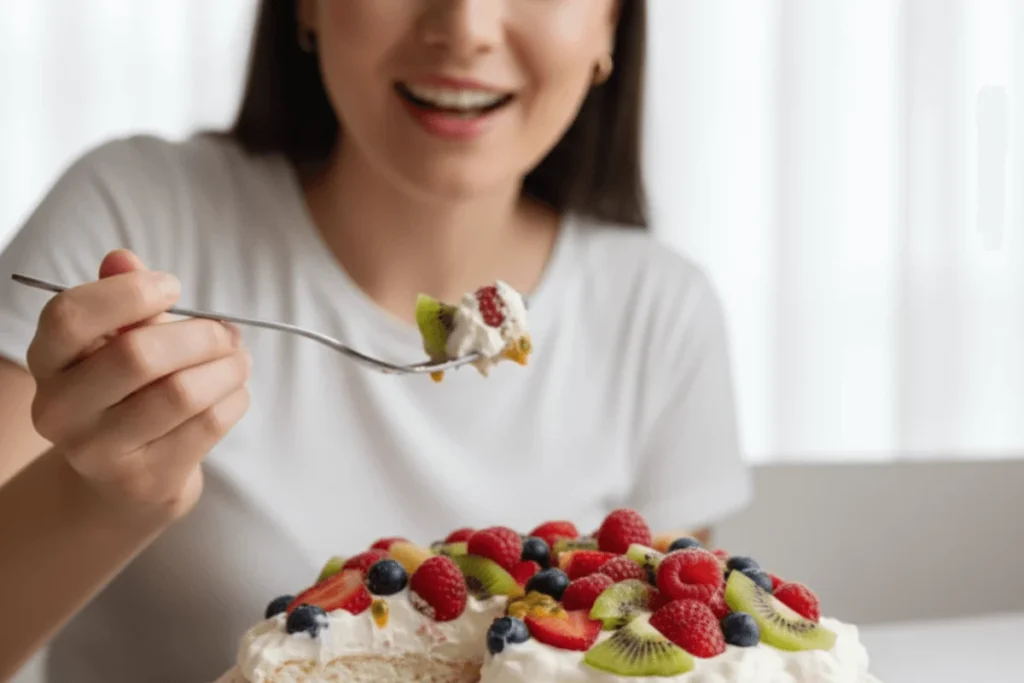
Pavlova with berries or pavlova with whipped cream offers endless fresh fruit pavlova combos that’ll make your mouth water.
Solving Common Pavlova Mistakes
Beginners, this is your pavlova troubleshooting lifeline—laugh off the fails and learn fast.
Why Your Meringue Weeps, Cracks, or Stays Sticky
- Weeping: Sugar didn’t dissolve; nail that grit test, folks.
- Cracking: It was pulled out too fast; oven cool-down every time.
- Failure to Whip: Sneaky yolk or greasy bowl; separate eggs carefully.
- Sticky Meringue: It needs more dry time—leave it in longer, even days for low-sugar ones; humidity and meringue are enemies.
Serving and Timing: Avoiding a Soggy Base
Moisture’s the enemy. Assemble curd, cream, and fruit right before eating—no more than 45 minutes—to keep that crisp pavlova shell intact, like Eton mess but classier.
FAQs
What is the secret to a good pavlova?
Slow-bake and cool for a crisp outside and a marshmallow inside, plus cornstarch for added structure. Rub that meringue smooth with no grit for the best texture.
What distinguishes a meringue from a pavlova?
Meringue is just whipped sugar and egg baked into a crisp texture. Pavlova amps it up with acid and cornstarch for the soft center—a fancy upgrade.
What are some common pavlova mistakes?
Yolk contamination, undissolved sugar (weepy mess), quick cooling (cracks), or early assembly (soggy doom) are all frequent issues. Avoid them with clean tools, proper mixing, and patient timing.
What kind of fruit goes best on pavlova?
Tart soft fruits like strawberries, raspberries, kiwi, and passion fruit work beautifully. Mix in apricot-pistachio or chocolate-cherry combos for fun twists.
Mastering a perfect pavlova recipe is all about patience—clean gear, melted sugar, and chill cooling. Go big base or mini pavlova nests, and you’ll crush that crunch-fluff combo. This dessert pavlova recipe is a stunner when fresh—your guests will flip.
You’ve Got This!
Look, mastering this pavlova recipe is less about being a master chef and more about knowing a few simple rules. Clean bowl, fine sugar, slow cool. That’s the holy trinity.
Don’t stress about a few small cracks—they add character and will be hidden under cream. You’re not aiming for machine-made perfection; you’re aiming for a stunning, delicious dessert that tastes like victory. Now go preheat that oven and get whipping. Your perfect, stress-free pavlova is waiting