
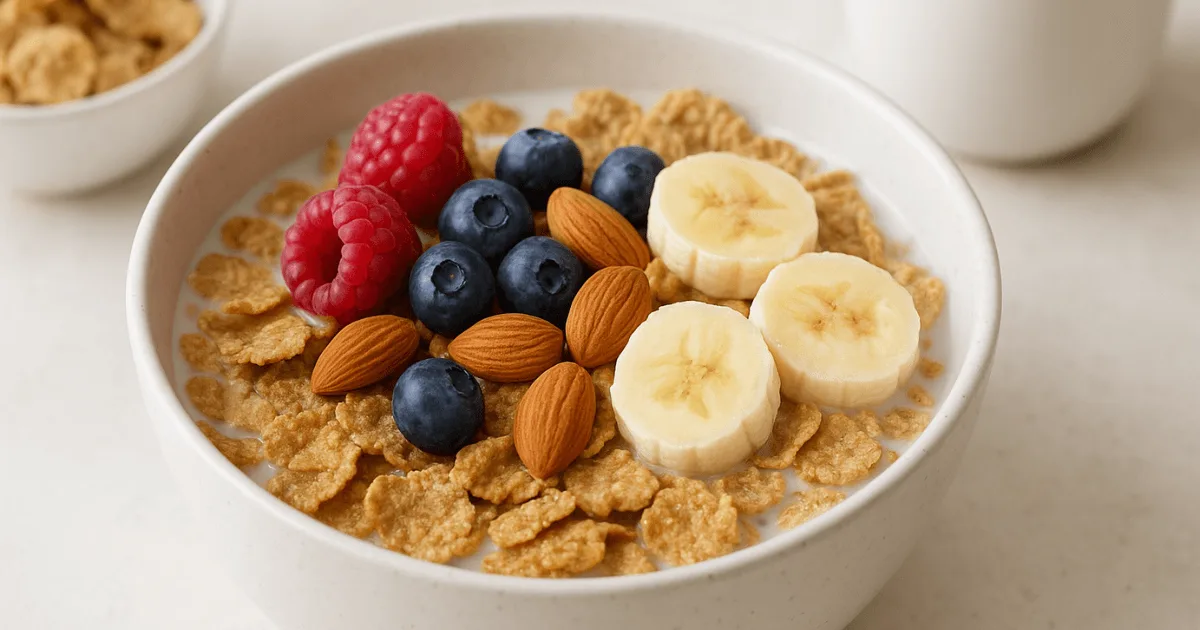
Cereal often gets a bad rap. You think “sugary kids’ cereals,” giant colorful boxes, and the crash-and-burn energy afterward. However, it doesn’t need to be like that! Believe it or not, cereal can be your breakfast BFF if you pick the right ones.
The secret? Whole grains, fiber, protein, and low added sugar. Sounds simple, huh? But it’s worth breaking down what that means so you don’t get tricked.
Table of Contents
Whole Grains in Cereals: The Real MVPs of Breakfast
You’ve probably heard about whole grains being healthier, but what are whole grains exactly? Imagine a grain kernel as a tiny little package with three parts:
Bran: The tough outer shell. This little guy’s loaded with fiber (think: the stuff that keeps your digestion running like a champ), minerals, and antioxidants that fight off nasty free radicals.
Endosperm: The middle, which stores carbs, your body’s main fuel.
Germ: The nutrient-dense core, loaded with protein, vitamins (hello, B vitamins!), and minerals.
If a cereal is made with whole grains, it means it still has ALL THREE parts intact. Refined grains? Nah, those have bran and germ stripped away, leaving mostly carbs that don’t keep you full or nourished for long.
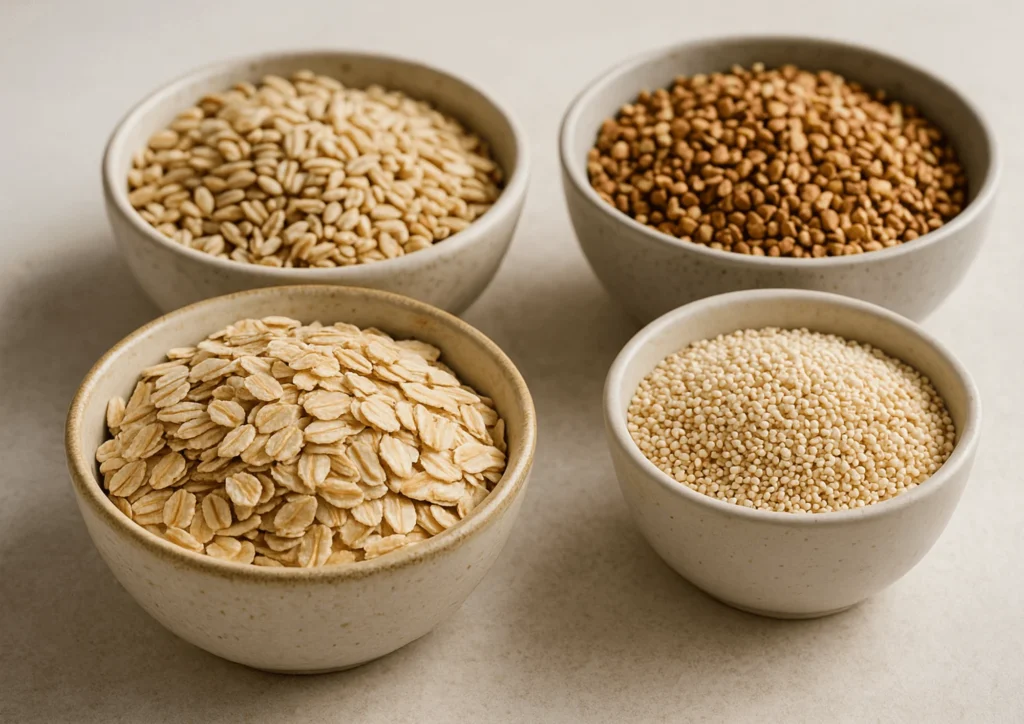
Look for cereals with grains like oats, quinoa, barley, millet, brown rice, rye, or buckwheat. These guys bring fiber, vitamins, minerals, and antioxidants into the game.
What to Look for on the Nutrition Label (Without the Headache)
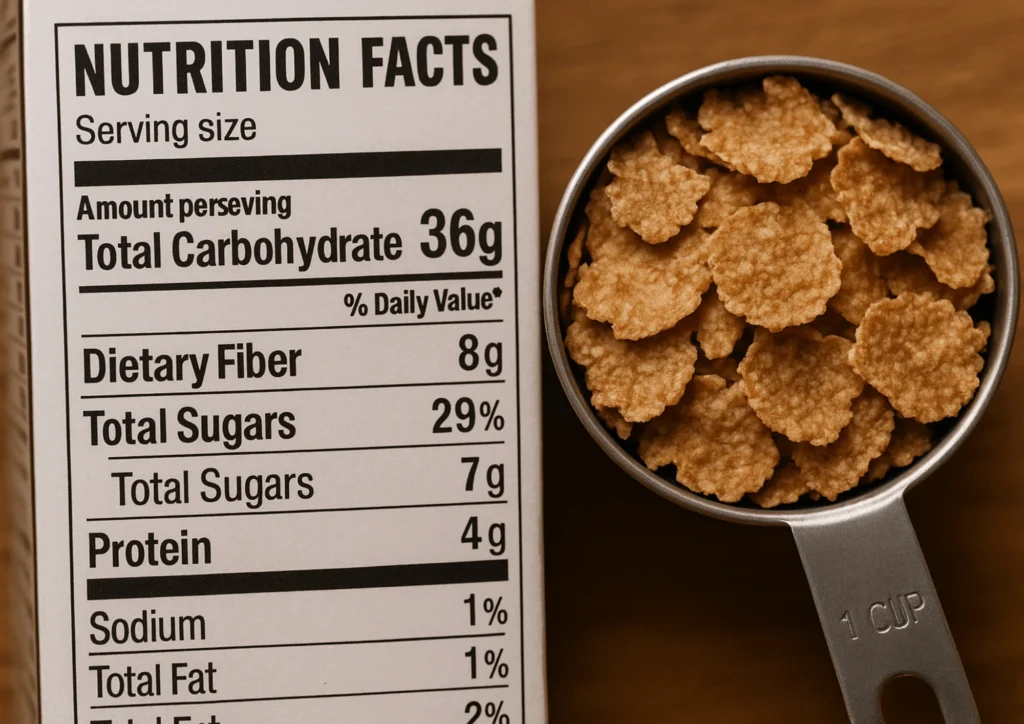
It can feel like decoding a secret cereal language when you read nutrition labels, right? Here’s your no-nonsense checklist:
- Fiber: Target at least 3–4 grams per portion. Fiber drags out hunger and keeps your gut happy. If you see cereal with less fiber than that, just say no.
- Added Sugar: Keep this under 6 grams per serving for “lighter” cereals, and under 9 grams if it’s granola or muesli. Warning: sugar lurks under tricky names—maltodextrin, rice malt syrup, agave, honey… yeah, natural sweeteners count too. Keep track of the total sugar level.
- Protein: Look for 5+ grams per serving. It ensures you feel full and provides energy until lunch. Bonus: Pair your cereal with milk, soy, or yogurt to boost protein way up.
- Sodium & Saturated Fat: Stay under 400 mg sodium and 2 grams saturated fat if possible—your heart will thank you.
- No Artificial Junk: Steer clear of synthetic dyes and sugar substitutes like aspartame or sucralose. They don’t do your body or brain any favors.
Beware of Label Trickery & Marketing
Cereal boxes can be sneaky little devils:
- Serving sizes may vary from a tiny 2/3 cup to a whopping 1.5 cups, which changes your sugar and calorie intake a lot. Always eyeball your portion!
- Ensure whole grain is listed as either the first or second ingredient. The term ‘wheat’ without ‘whole wheat’ is a cautionary indicator.
- Boxes with pictures of fruit or nuts often don’t have much real fruit or nuts inside. It’s usually just for looks.
- Those “heart-healthy” claims? They’re often based on fat and cholesterol, not sugar content. So, check sugars anyway.
My Favorite Healthy Cereals (Seriously Tasty AND Good For You)
Here’s the healthy cereal squad I trust and recommend. They’ve got the goods—whole grains, fiber, protein, and NOT too much sugar:
- Plain Oats (Steel-cut or Rolled): The OG breakfast hero. Incorporate toppings like banana, nuts, or cinnamon to elevate it into a festival of flavors. Overnight soaking helps your body absorb more minerals, too.
- Shredded Wheat (Plain): Minimalist with no added sugar but tons of fiber. Chewy and satisfying.
- Muesli (Unsweetened): Oats + nuts + seeds + dried fruit combo (watch sugar carefully if it’s store-bought). Homemade versions let you control sweetness.
- Kashi GoLean! Original: Packs a solid punch of protein and fiber, with 7g sugar, which isn’t too crazy.
- Nature’s Path Smart Bran: Fiber champion with 17g per serving! Sugar’s a bit higher (8g), but still decent considering the fiber.
- Cascadian Farm Purely Os: Tastes like plain Cheerios but organic and less sugary.
- Seven Sundays Oat Protein Cereal: Gluten-free with a nice protein and fiber combo.
- Purely Elizabeth’s Ancient Grain Granola: Made with ancient grains + a touch of coconut sugar sweetener, mild but delicious.
- Bob’s Red Mill Granola and Muesli: Good balance of wholesome grains with moderate sugar.
- Lovebird Cereal: Grain-free, paleo-friendly, kid-approved (important, right?).
- Original Cheerios: Classic that’s still one of the best. 100% whole grain oats, gluten-free, low sugar, and with 4g fiber, including 2g soluble (that’s heart-helping fiber).
- Grape Nuts: Not for the faint-hearted but packed with fiber and protein, and zero added sugar.
- All-Bran Buds: The fiber content is off the charts, but the texture may not be for everyone.
- Uncle Sam: Just whole wheat, flaxseed, and salt. No nonsense, no sugar drama.
How to Make Your Cereal Even Better (Because Why Not?)
- Toss in fresh or frozen berries, sliced bananas, or apples for natural sweetness and extra fiber.
- Sprinkle some nuts or seeds for crunch + healthy fats and protein.
- Pour over milk, soy, almond, or oat milk to up protein and creaminess.
- Add cinnamon or pumpkin spice—because cereal tastes way better with a little flair.
Wanna Get Fancy? Try Making Your Overnight Oats!
Here’s a recipe I swear by:
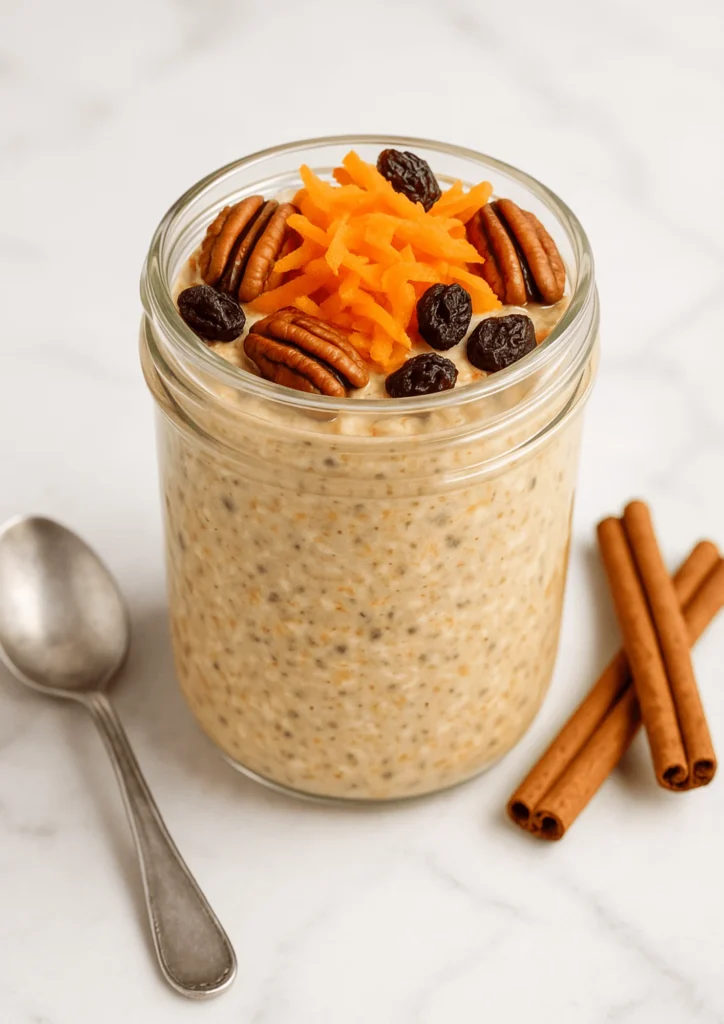
Carrot Cake Overnight Oats
- 4 cups water
- 1 cup organic steel-cut oats
- ⅓ cup chia seeds (fiber and omega-3 magic)
- ¾ cup shredded carrots (fresh or frozen)
- ½ cup organic raisins
- ⅓ cup diced unsulfured apricots
- ¼ cup pure maple syrup (natural sweetness)
- Pinch of pink Himalayan salt
- Cinnamon or pumpkin pie spice to taste
How to make
- Put all items in a pot and let them simmer gently for 1–2 minutes.
- Turn down the heat, allow it to simmer for 10 minutes, then cover and let it sit overnight.
- Grab a bowl, add milk, and top with pecans or whatever you love.
- Store leftovers in fridge up to 4 days—breakfast for the win!
Or DIY your muesli mix with rolled oats, bran flakes, wheat germ, cinnamon, and add fresh fruit or honey when you want it sweeter.
Wrapping It Up: Cereal Can Be Your Healthy Pal
Cereal’s not just sugary kid stuff — it can fuel your mornings, help with weight loss, and keep your energy stable if you choose right. Whole grains, fiber, protein, and low sugar are your cereal BFFs here.
Read those labels like a pro, ditch fake junk, and maybe start experimenting with homemade cereal to keep things tasty and healthy.
Your gut, taste buds, and waistline will be doing happy dances.
Healthy Cereal FAQs
What are healthy cereals?
Cereal high in whole grains, fiber, protein, low in sugar and sodium — like plain oats, unsweetened shredded wheat, muesli, and brands like Kashi and Nature’s Path.
Are Cheerios healthy?
Yes, Original Cheerios are 100% whole grain, low sugar, gluten-free, high fiber, and fortified with vitamins.
Is Special K healthy?
Many varieties are high in sugar and sodium; read labels carefully. There are lower-sugar alternatives available.
Healthy cereal for kids?
Look for organic, low-sugar, and high-fiber cereals like Cascadian Farm Purely Os, Kashi Smoothie Loops, or Lovebird.
Why are many cereals considered unhealthy?
Highly added sugar, refined grains, artificial additives, and misleading marketing contribute to this perception.
Have questions? Want more recipes or cereal hacks? Just holler!
This guide nails it—switching to high-fiber options like Fiber One has boosted my energy without the crash during weight loss.
Solid advice on low-sugar picks; Grape-Nuts keeps me full till lunch every time.