
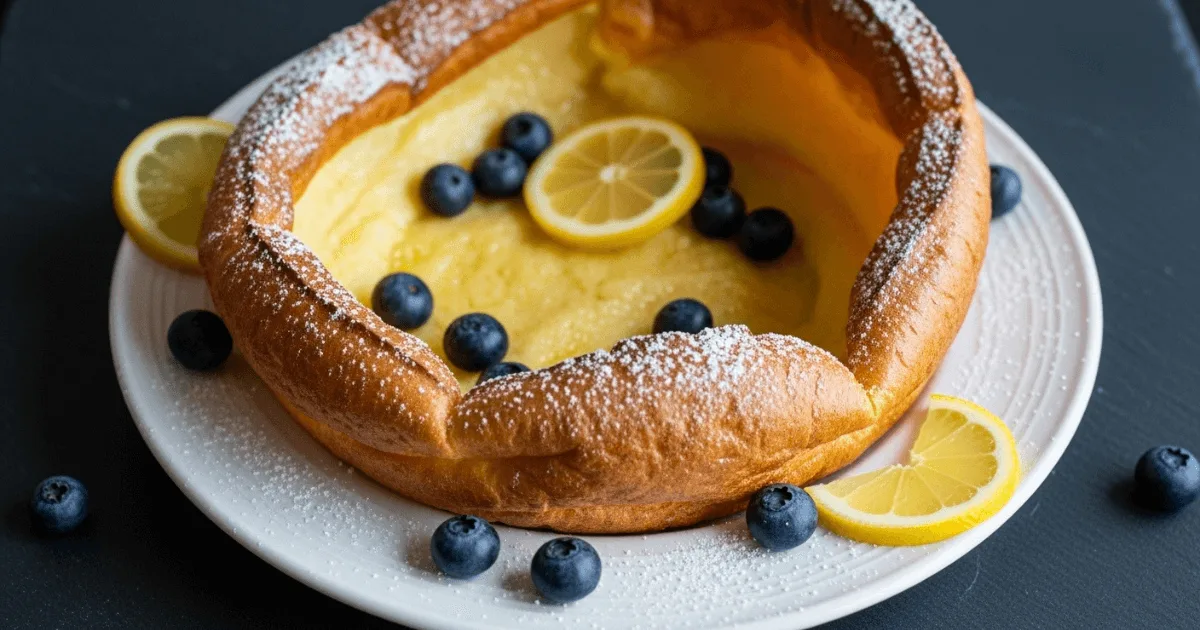
German Pancakes have completely taken over breakfast culture—especially in North America. If you’ve ever fallen down a rabbit hole of weekend brunch ideas or drooled over puffed-up breakfast pics on Instagram, you’ve probably seen that dramatic, sky-high version coming straight out of the oven, looking like it’s trying to escape the pan.
Table of Contents
But here’s something most people don’t know:
There are two completely different dishes called “German Pancakes.”
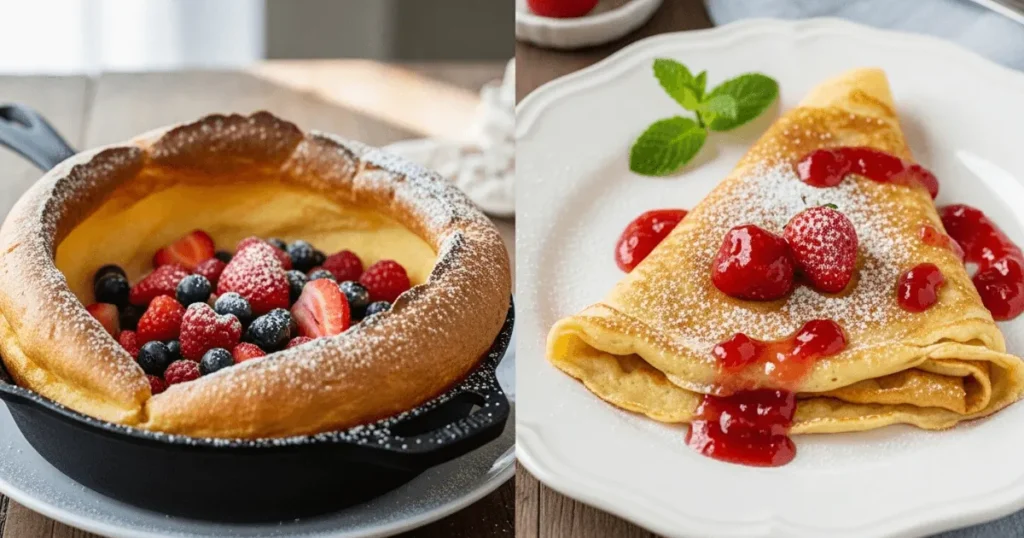
The Puffy Oven Pancake
This is the one everyone in the U.S. calls a German Pancake. It’s baked, it’s puffy, it’s golden, and honestly, it’s a little show-offy. With just a handful of ingredients and a blazing-hot oven, this pancake rises like crazy—kind of like a soufflé that decided to loosen up and have fun.
Fun fact: even though it’s called a German Pancake, this version actually originated in the U.S. It became popular in Washington state around the early 1900s.
The Traditional Pfannkuchen
In actual Germany, “Pfannkuchen” (or “Eierkuchen”) is a thin, crepe-like pancake made in a skillet. Think: thicker than a crepe, thinner than a fluffy pancake. Germans fill them with everything from jam to mushrooms to smoked salmon. They’re low-key amazing.
Understanding these two versions isn’t just trivia—it helps you make the best German Pancakes at home. In this guide, we’re diving deep into the puffy, oven-baked version while still paying homage to the original German Pfannkuchen.
Let’s get into the five secrets that will level up your pancake game.
Secret 1: Mastering the Classic Puffy German Pancake (Oven Pancake Recipe)
The dramatic, puffy German Pancake—aka the Dutch Baby—gets its height from a super-thin, extra-egg-heavy batter and a very hot pan. There’s no baking powder involved. Instead, all the magic comes from:
- whipped eggs
- steam
- aerated batter
- strong oven spring
Put those together, and you get that famous golden crown.
Essential Ingredients and Equipment
The classic version is as simple as it gets: eggs, milk, flour, vanilla, salt, and butter. But if you want to get fancy, there’s also a sourdough Dutch Baby that’s richer, thicker, and has a subtle tang.
Here’s the laid-back breakdown:
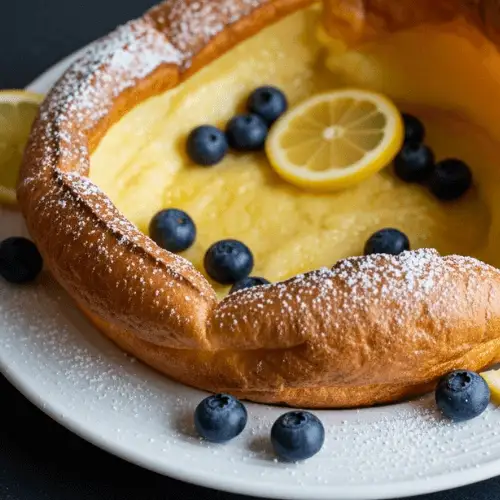
The Sourdough German Pancake
Equipment
- oven
- Cast Iron Skillet or a regular 9×13 metal pan
- Blender This makes it SO fast, trust me
- Your measuring cups
Ingredients
- 6 Large Eggs Use room-temp ones if you can—they puff higher! (Duck eggs = bonus points for richness!)
- 320 g Sourdough Starter (Active) This is the star! Make sure your starter is fed and bubbly.
- ⅓ cup Whole Milk We use less milk because the starter is already wet. Science!
- 6 tbsp Salted Butter Salted butter is just better here. It caramelizes perfectly.
- 1 tsp Vanilla Extract A tiny bit of sweetness.
- ½ tsp Fine Salt Balances everything out.
- 1 tbsp Maple Syrup Toss this in the batter—it cuts the sourdough tang just right!
Instructions
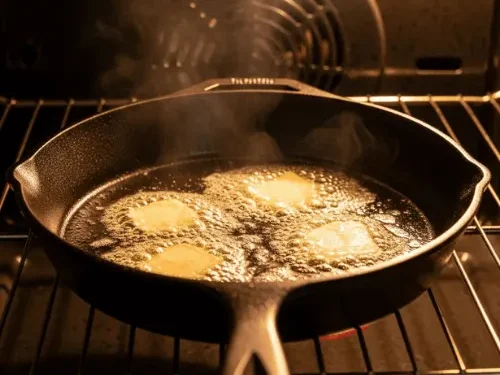
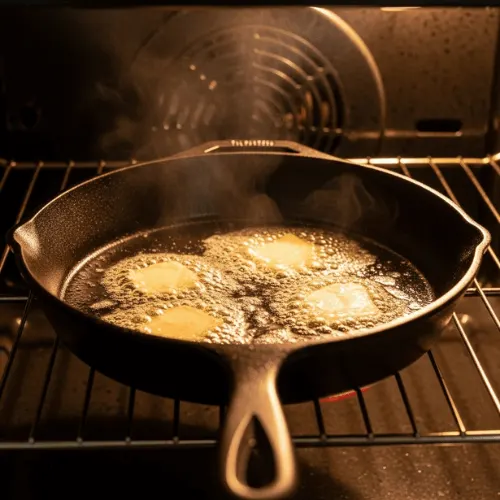
- Crank the Heat & Melt : Blast your oven to 425°F. Put the 6 tbsp of butter right into your pan and slide it into the oven.
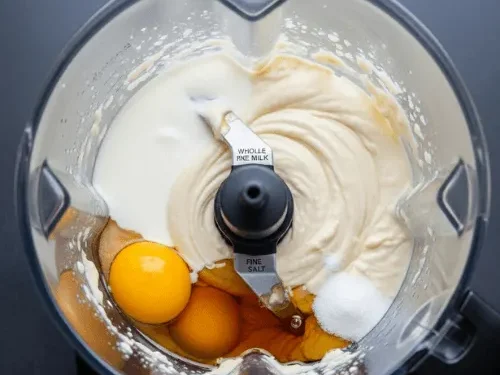
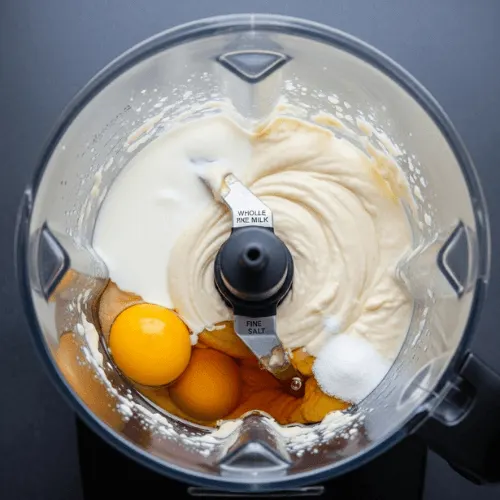
- Blend, Baby, Blend! Throw the eggs, starter, milk, vanilla, salt, and syrup into the blender. Blend for a minute until silky smooth.
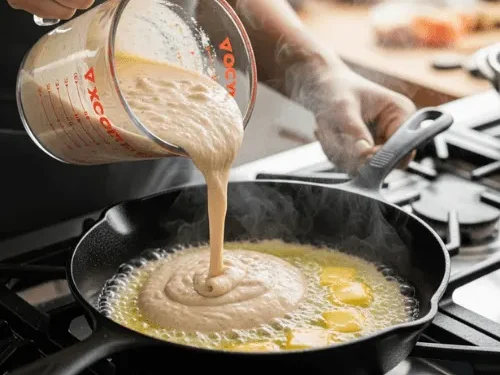
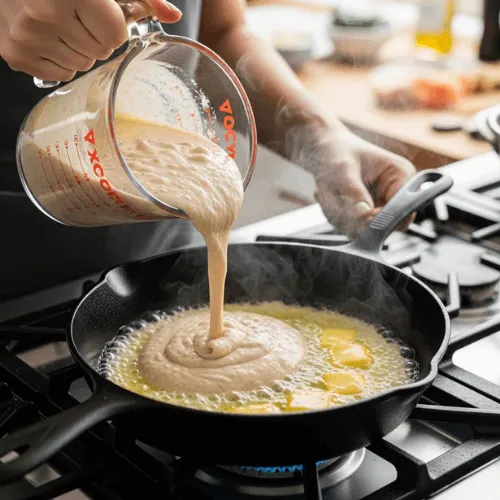
- Pour Like a Boss: Pull out the sizzling hot pan. Pour the batter right over the melted butter—don’t be shy!
- Patience, Padawan:Bake for 20–25 minutes. DO NOT OPEN THE DOOR! Seriously, no peeking. Wait until it’s golden and looks like a ruffled masterpiece.
- Serve NOW: Pull it out, cut it up, and load it with powdered sugar and lemon juice. Eat it while it’s hot!
Notes
- Go Cast Iron: If you have a cast-iron skillet, use it! It holds heat better and gives you that perfect, crispy, caramelized bottom.
- Savory Swap: Want to eat this for dinner? Skip the vanilla and syrup, add a little black pepper, and top it with melted Gruyère cheese or sautéed mushrooms when it comes out. Game changer.
- Don’t Rest the Batter: Unlike regular pancakes, this Dutch Baby batter likes to be baked right after blending. Get that air in, and get it in the oven!
Nerdy Nutrition (Approximate Calories)
| Metric | Amount | Metric | Amount |
|---|---|---|---|
| Calories | 3350 kcal | Sugar | 5–10 g |
| Protein | 12–15 g | Sodium | 350–450 mg |
| Total Fat | 18–22 g | Cholesterol | 200–250 mg |
| Carbs | 25–30 g | Fiber | 1–2 g |
Secret 2: Understanding the Authentic German Pfannkuchen
Now that you’ve conquered the baked version, let’s give some love to the original German Pfannkuchen.
These stovetop pancakes are kind of like crepes but a little thicker, and they’re super versatile: sweet, savory, rolled, folded—you name it.
Pfannkuchen (Crepe-Style) Recipe Highlights
| Ingredient | Pfannkuchen Recipe | Key Steps |
|---|---|---|
| Batter | Flour, milk, eggs, salt | Whisk until bubbles form. |
| Optional | Sparkling water | Adds extra lightness. |
| Rest | 30 minutes | Makes the batter silky. |
| Frying | Butter | Spread ½ cup of batter in a hot pan. |
Pfannkuchen vs. Dutch Baby: What’s the Difference?
| Aspect | Pfannkuchen | Dutch Baby |
|---|---|---|
| Texture | Thin and flexible | Tall, airy, and custardy |
| Cooking Method | Stovetop | Oven |
| Serving | Folded or rolled | Sliced and topped |
Once you know both, you can switch between them depending on your mood, your time, or your level of hunger.
Secrets 3, 4, & 5: Customizing Your German Pancake Experience
Here’s where things get exciting. Think of the German Pancake as your breakfast canvas—sweet, savory, seasonal… it all works.
Secret 3: Dive Into Delicious Variations
Sweet & Fruity Variations
- Wild Blueberry Dutch Baby
Toss blueberries into the batter. They burst as they bake—pure magic. - Apple German Pancake
Dutch Baby version: sauté apples with butter, cinnamon, and sugar, then pour the batter on top.
Pfannkuchen version: add thin apple slices directly to the batter. - Cinnamon-Raisin
Like eating the coziest breakfast ever. - Pear, Peach, or Raspberry Dutch Baby
These fruits caramelize beautifully and add natural sweetness.
Savory Variations
Savory Dutch Baby ideas:
- Bacon + Gouda + apple + sage
- Mozzarella + tomatoes + basil
- Ham + cheddar + chives
Savory Pfannkuchen fillings:
- Smoked salmon + cream cheese
- Sautéed mushrooms + caramelized onions
- White asparagus + hollandaise (classic German combo)
Secret 4: Optimized Prep Techniques
This is where tiny details make a big difference.
- Let the Oven Fully Preheat
You need that 425°F blast for the big puff. - Watch Your Butter
Brown butter is delicious in many things… but here it can get bitter fast. - Use a Blender for Maximum Airiness
Blenders whip air into the batter, giving extra height. - For Sourdough Lovers
Use a starter that’s been fermenting for around 12 hours—bubbly, light, and ready to rise.
Secret 5: Perfect Toppings and Pairings
This is where you get to have fun.
Sweet Toppings:
- Powdered sugar
- Maple syrup
- Lemon juice + powdered sugar
- Whipped cream + berries
- Cinnamon sugar
- Lemon curd
- Fruit compote
Savory Pairings:
- Smoked salmon + dill
- Ham, cheese, mushrooms
- Prosciutto + mozzarella
- Breakfast sausage on the side
- Slice leftover Pfannkuchen into strips for Flädlesuppe
FAQ
What distinguishes German pancakes from American pancakes?
German pancakes are thinner, eggier, and usually baked. American pancakes are fluffy and cooked on a griddle.
Why do German pancakes deflate?
Because they’re full of steam. Once they cool, they relax. It’s totally normal.
Can German pancakes be savory?
Absolutely—both versions are super flexible.
How is sourdough starter used?
It replaces the flour and adds a slight tang. The eggs become the main leavening.
Conclusion
German Pancakes—whether you go for the big, dramatic Dutch Baby or the classic German Pfannkuchen—are all about simple ingredients and impressive results. Nail the oven temperature, try fun variations, and experiment with toppings, and you’ll have a breakfast that looks fancy but is secretly super easy.
With endless ways to switch them up, these pancakes aren’t just breakfast—they’re a whole vibe.