
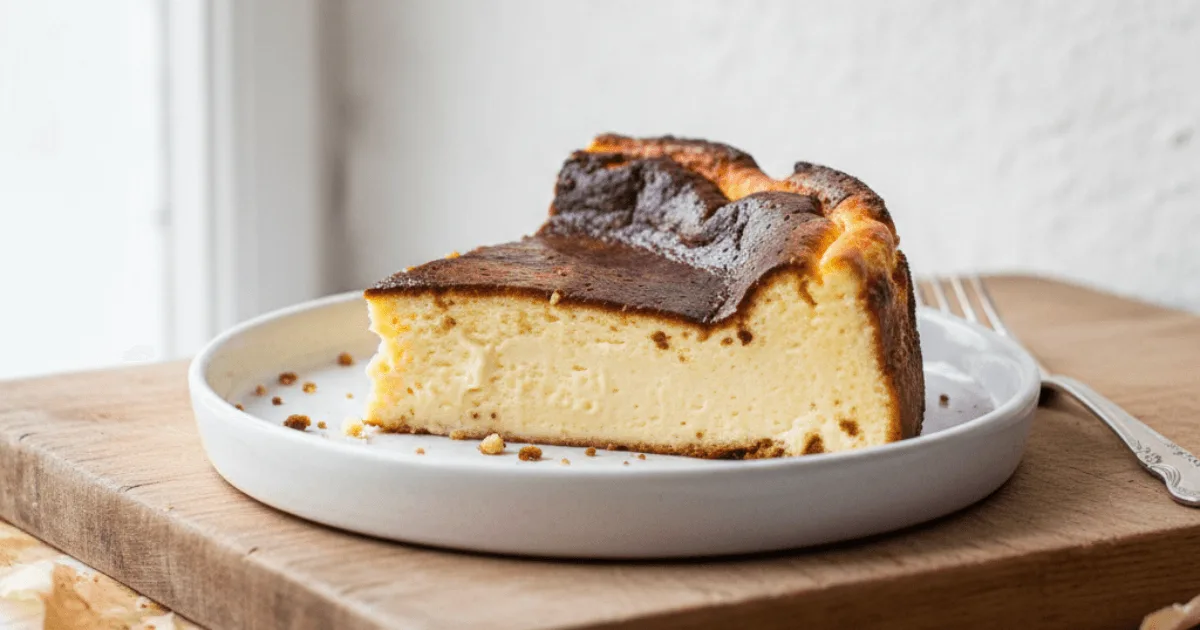
If there’s one dessert that has quietly taken over the world—without frosting, without decor, and honestly without even trying—it’s the Basque Cheesecake. You might’ve heard it called burnt cheesecake or San Sebastian cheesecake, but whatever name you prefer, this crustless beauty has fans everywhere. And for good reason: that silky middle, the caramelized top, the “oops, it burned but cutely” look… It’s irresistible.
Table of Contents
But here’s the thing—getting that perfect combo of a gooey, custardy middle and a deep golden exterior isn’t as simple as tossing everything into a bowl and hoping for the best. Nope. It comes down to three little secrets. And today, we’re spilling all of them.
Understanding the Unique Texture of Burnt Basque Cheesecake
Basque cheesecake comes straight from San Sebastián, a coastal city in Spain that basically treats food like an art form. The most famous version comes from La Viña, a tiny bar where people still queue just to get a slice of this creamy, rustic wonder.
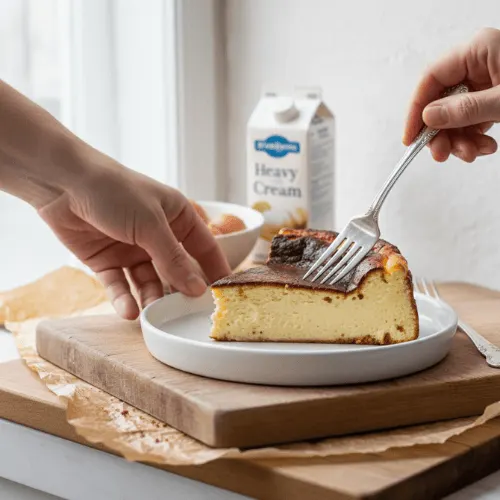
What makes Basque cheesecake stand out is the contrast: a golden, caramelized, slightly burnt top (thanks to that super-hot oven) wrapped around a center that stays luscious, custardy, and a little wobbly. It’s like cheesecake and crème brûlée had a delicious baby.
Here’s how it stacks up against other cheesecakes:
Basque Cheesecake Texture Comparison
| Cheesecake Type | Crust | Bake Method | Typical Texture |
|---|---|---|---|
| New York Cheesecake | Biscuit/Graham Cracker | Water bath | Dense, smooth, creamy |
| Japanese Soufflé Cheesecake | None | Low heat + water bath | Ultra fluffy, bouncy, airy |
| Basque Cheesecake | Crustless | High heat, no water bath | Custard-like, creamy, mousse-y |
1. Mastering Ingredient Temperature and Mixing Technique
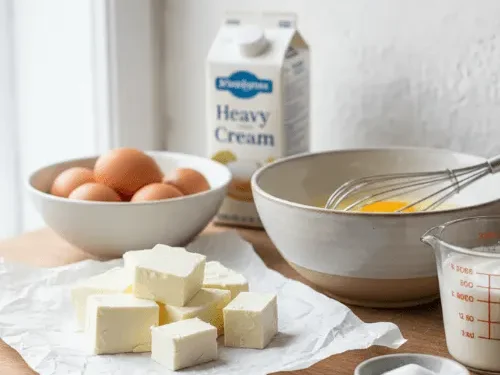
The first big secret? Temperature. And not just oven temperature—your ingredients need to warm up too.
Cold ingredients act stubbornly. They don’t mix well. They create lumps. And they can even cause cracks. But when everything’s at room temp, the batter practically blends itself.
Why Room Temperature Ingredients Are Critical for Texture
Think of it like this: warm ingredients = smooth batter = creamy cheesecake. Easy!
Here’s why room temp matters:
- No lumps: Cream cheese, eggs, and cream blend like a dream when they’re not fridge-cold.
- No overmixing: You won’t have to beat the batter to death just to get it smooth, which prevents excess air (aka crack city).
- Even baking: Cold batter makes the edges cook too fast and leaves the middle raw… not the cute molten kind, the wrong kind.
Speedy ways to warm things up:
- Cream cheese: cube it and microwave for 10–15 seconds at a time.
- Eggs: pop them in warm water for 5–10 minutes.
- Heavy cream: microwave in short bursts until it loses the chill.
Small steps, big difference.
The Low-Speed Mixing Rule (Preventing Over-Aeration)
Basque cheesecake is supposed to be creamy, not airy like a sponge cake. So keeping the batter dense is the whole game.
Here’s the play-by-play:
- Beat the cream cheese first until it’s smooth.
- Add sugar and mix gently.
- Add eggs one at a time… slowly… like you’re in no rush.
- Stop mixing once everything looks blended.
- Scrape down the bowl so no sneaky lumps hide at the bottom.
Overmixing adds too much air, which makes the cheesecake rise, deflate, and—yep—crack. We are not about that life.
2. Exactness in Ingredient Quantities (Especially Eggs and Cream Cheese).
Building on that smooth batter, Basque cheesecake is technically a custard-based dessert, which means measurements really matter—especially when it comes to eggs and fat.
Too much egg? Dense. Too little? Soup. Low-fat ingredients? Disaster.
The Critical Role of Full-Fat Dairy
Fat = creaminess. Period.
Use:
- Full-fat cream cheese (the block kind, not the spread).
- Heavy or whipping cream (35–42% fat).
If you reach for the low-fat stuff:
- The cheesecake may not set.
- It could taste watery.
- The texture turns grainy.
Full-fat dairy also helps give you that gorgeous caramelized top we all love.
Why You Must Measure Eggs by Weight
This step is huge, and so many recipes forget to mention it. Eggs come in all shapes and sizes—so if you’re using “4 eggs,” the actual amount can vary a ton.
Aim for 220g of lightly whisked eggs (usually 4–5 large eggs).
It’s one of the easiest ways to guarantee that smooth, custard-like center every time.
Here’s a classic 8-inch Basque cheesecake formula:
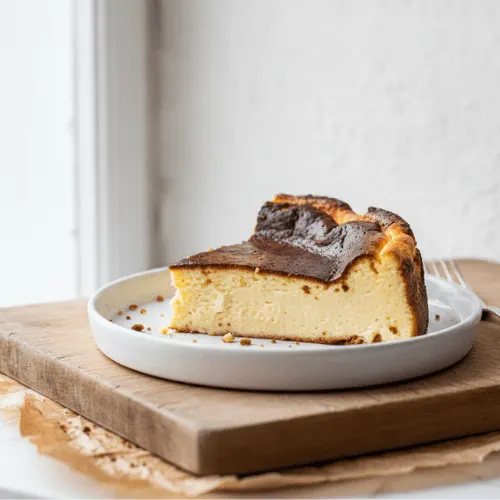
Essential Burnt Basque Cheesecake
Equipment
- 8-inch springform pan or 9-inch
- Mixing bowls
- Electric mixer
- Parchment paper
- Kitchen scale
- oven thermometer
Ingredients
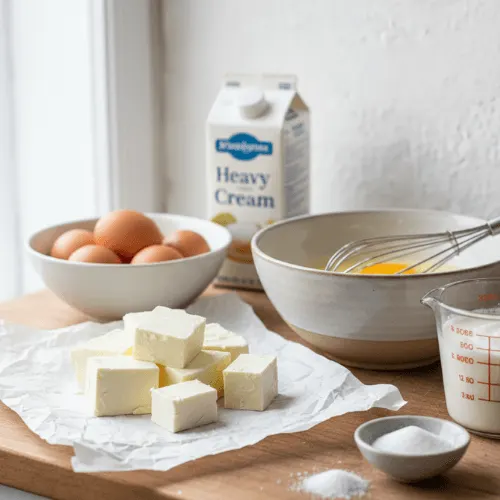
- 750 g full-fat cream cheese room temperature
- 1 cup granulated or caster sugar 200 g
- 5 large eggs 220 g
- 1¼ cups heavy cream 300 ml
- ¼ cup all-purpose flour 30 g
- 1 tsp vanilla extract optional, but delicious
Instructions
Prep the pan
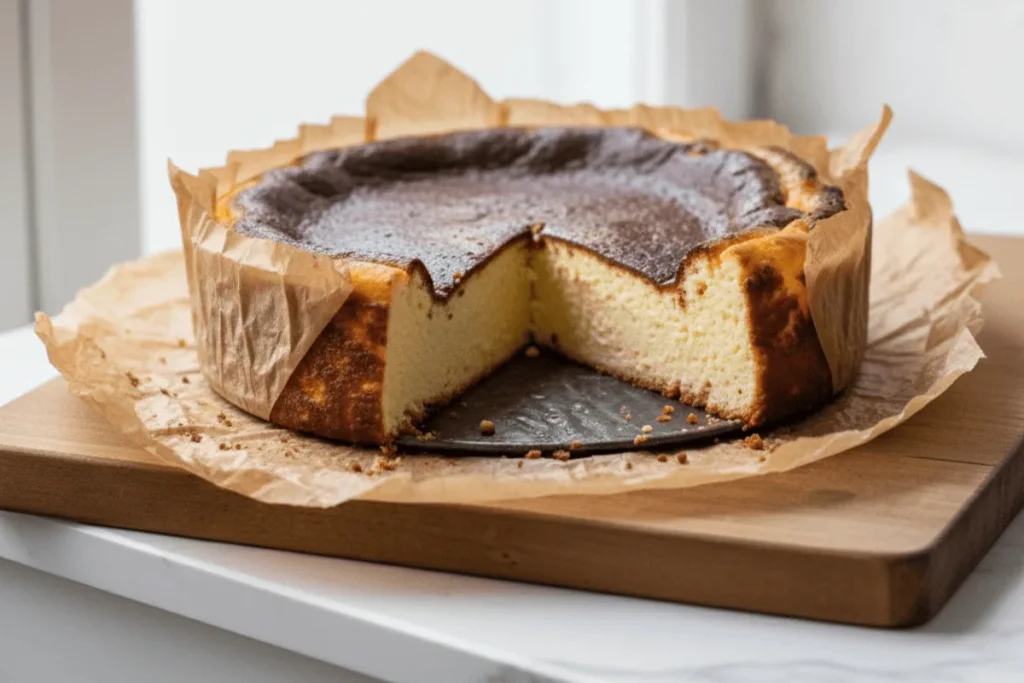
- Line an 8-inch springform pan with two large sheets of parchment paper, letting them extend past the sides. The wrinkles give it that classic, perfectly imperfect Basque look.
Preheat the oven
- Heat to 400°F (200°C) and let it warm up for 20–30 minutes. It's the elevated temperature that creates the cheesecake's distinctive charred surface.
Mix the batter
- Beat the cream cheese until smooth and friendly.
- Blend in the sugar and mix only until it is just mixed.
- Add the eggs one at a time on low speed—slow and steady; don’t overmix.
- Mix in the heavy cream and vanilla.
- Sift in the flour and fold gently.
- The goal is smooth, not airy.
Bake
- Pour the batter into your parchment-lined pan.
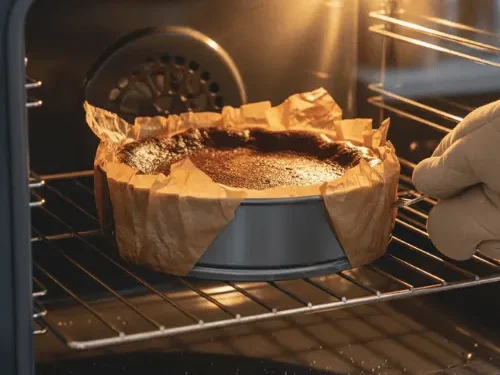
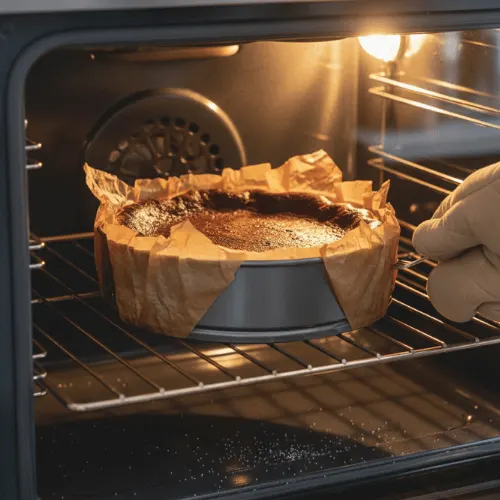
- Bake for 45–55 minutes.
- The top should look deeply golden and caramelized, almost burnt—that’s the whole point!
- The center should jiggle like soft pudding; this indicates it’s ready.
Cool & chill
- Let the cheesecake rest in the pan on a rack for 1–2 hours.
- Move it, uncovered, to the fridge for at least 4 hours—overnight is best.
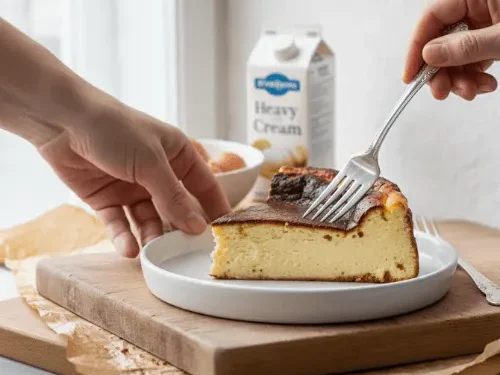
- Serve slightly chilled or let it warm up for a few minutes—it’s totally your call.
Notes
- Full-fat cream cheese and heavy cream make the dream team.
- Don’t fear the burnt top: that darkness equals flavor.
- If your oven refuses to brown it, broil for 1–2 minutes—don’t walk away!
- Want it slightly lighter? Reduce sugar to ¾ cup.
- Gluten-free? Use cornstarch instead of flour, or skip it for an even softer center.
- It tastes even better the next day, so try not to eat it all immediately.
Nutrition (Per 1 slice, 10 servings)
Approximate values—but yes, it’s worth every calorie.- Calories: 455 kcal
- Fat: 36 g
- Saturated Fat: 21 g
- Carbohydrates: 25 g
- Sugar: 23 g
- Protein: 7 g
- Fiber: 0 g
- Sodium: 260 mg
- Cholesterol: 165 mg
3. The High-Heat Bake and the Crucial Jiggle Test
This is where Basque cheesecake gets its signature look. Unlike other cheesecakes that shy away from high temperatures, Basque cheesecake thrives on heat.
You want:
- A deeply browned top.
- Caramelized edges.
- A molten, pudding-like center.
All from one aggressive bake.
Achieving the Deeply Burnished Top
Basque cheesecake is usually baked around 400°F (200°C) or hotter, often up to 425°F for bolder char. That intense heat triggers the Maillard reaction—science talk for “tastes amazing and smells like caramel.”
A few tips:
- Preheat your oven for at least 1 hour for consistent heat.
- Scrunch up your parchment paper for those rustic, wrinkly edges.
- Always use a springform pan.
Optional move: If your top isn’t brown enough, broil it for 1–2 minutes. But watch closely—it burns fast.
Doneness: The Internal Temperature and Jiggle
Overbaking ruins the whole vibe. This cheesecake is supposed to wobble.
You’re looking for:
- A jiggly middle (like soft pudding).
- Set-but-tender edges.
- Internal temp of 150–155°F (65.5–68°C).
That wiggle means the center will set just right as it cools.
Cooling and Serving for Optimal Creaminess
Cooling is basically part two of the baking process.
How to do it right:
- Let it rest in the pan for one to 2 hours until it cools.
- Refrigerate uncovered for at least 4 hours (overnight is dreamy).
- Let it sit 5–30 minutes at room temperature before serving.
Too cold = firm. Slightly warm = heavenly creamy perfection.
FAQs
Is Basque cheesecake gluten-free?
Usually, there’s a tiny bit of flour, but you can easily swap in gluten-free flour or cornstarch. Some modern versions skip flour entirely.
Is Basque cheesecake from France or Spain?
Spain! Specifically, San Sebastián, in the Basque Country. La Viña invented the modern version.
What does Basque cheesecake taste like?
Rich and velvety, with gentle sweetness and a caramelized surface that imparts a hint of bitterness—similar to a combination of crème caramel and cheesecake.
What’s the difference between Japanese and Basque cheesecake?
Japanese cheesecake: fluffy, airy, jiggly.
Basque cheesecake: creamy, custardy, crustless, and intentionally burnt on top.
Achieving Next-Level Texture in Your Basque Cheesecake
Mastering Basque cheesecake is honestly a fun mix of simple ingredients and little precision tricks. When you get them right, the payoff is ridiculously good.
Quick recap:
- Secret 1: Use room-temp ingredients + mix slowly.
- Secret 2: Use full-fat everything + measure eggs by weight.
- Secret 3: Bake hot + trust the jiggle.
Do these three things, and you’ll be making Basque cheesecake that not only rivals the famous La Viña version—but might even outshine it. Rustic outside, dreamy inside, and addictive from the very first bite.